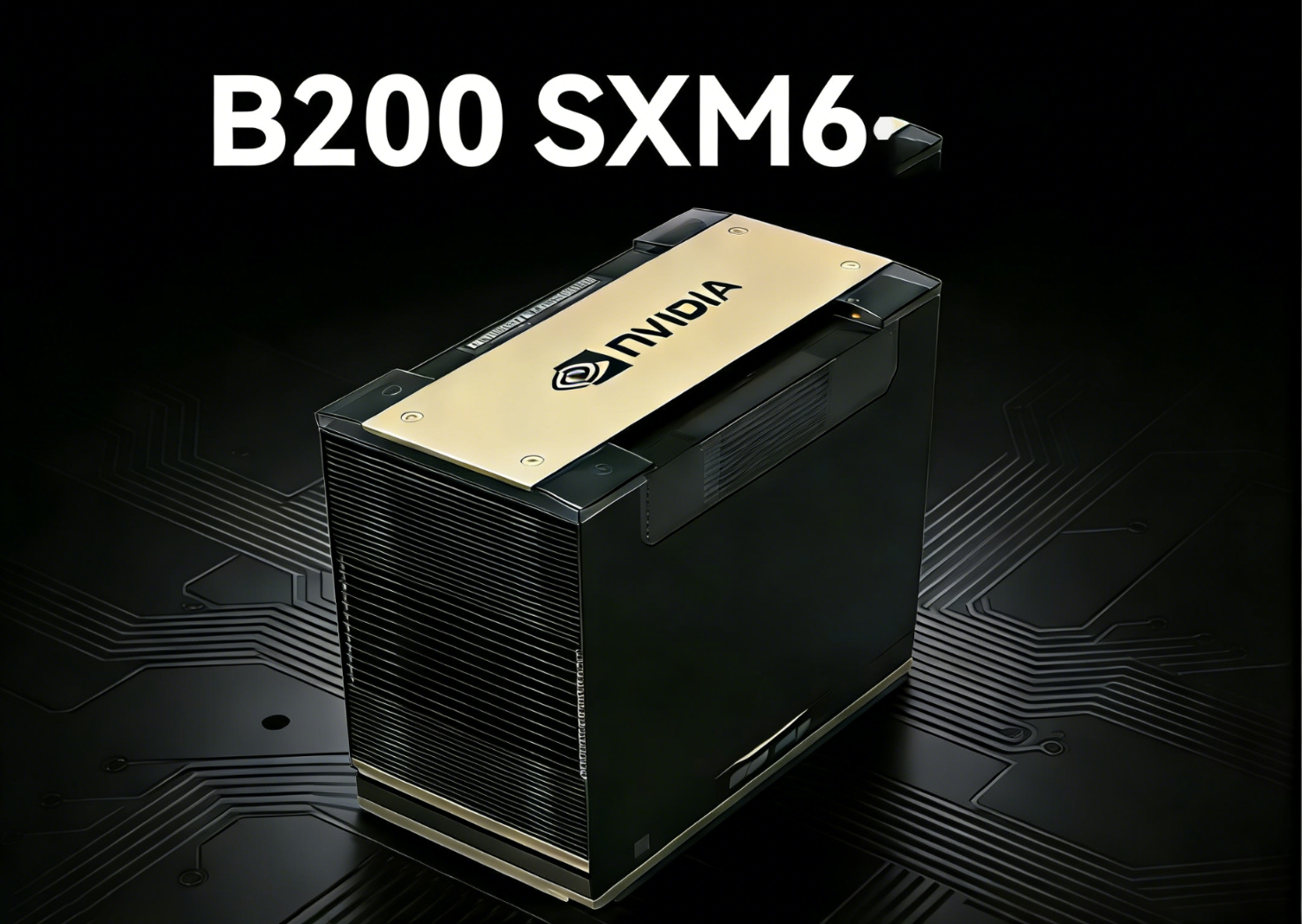
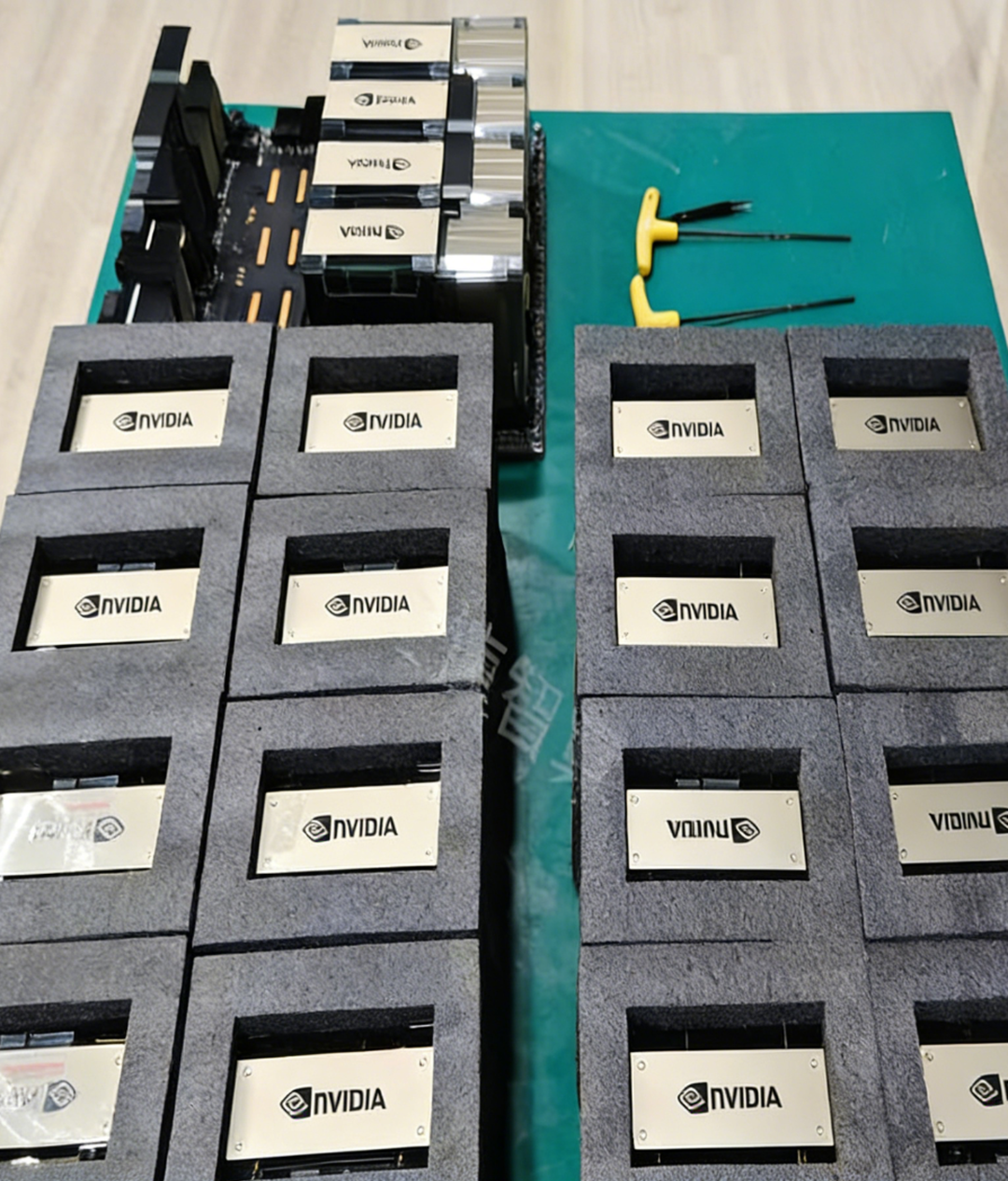
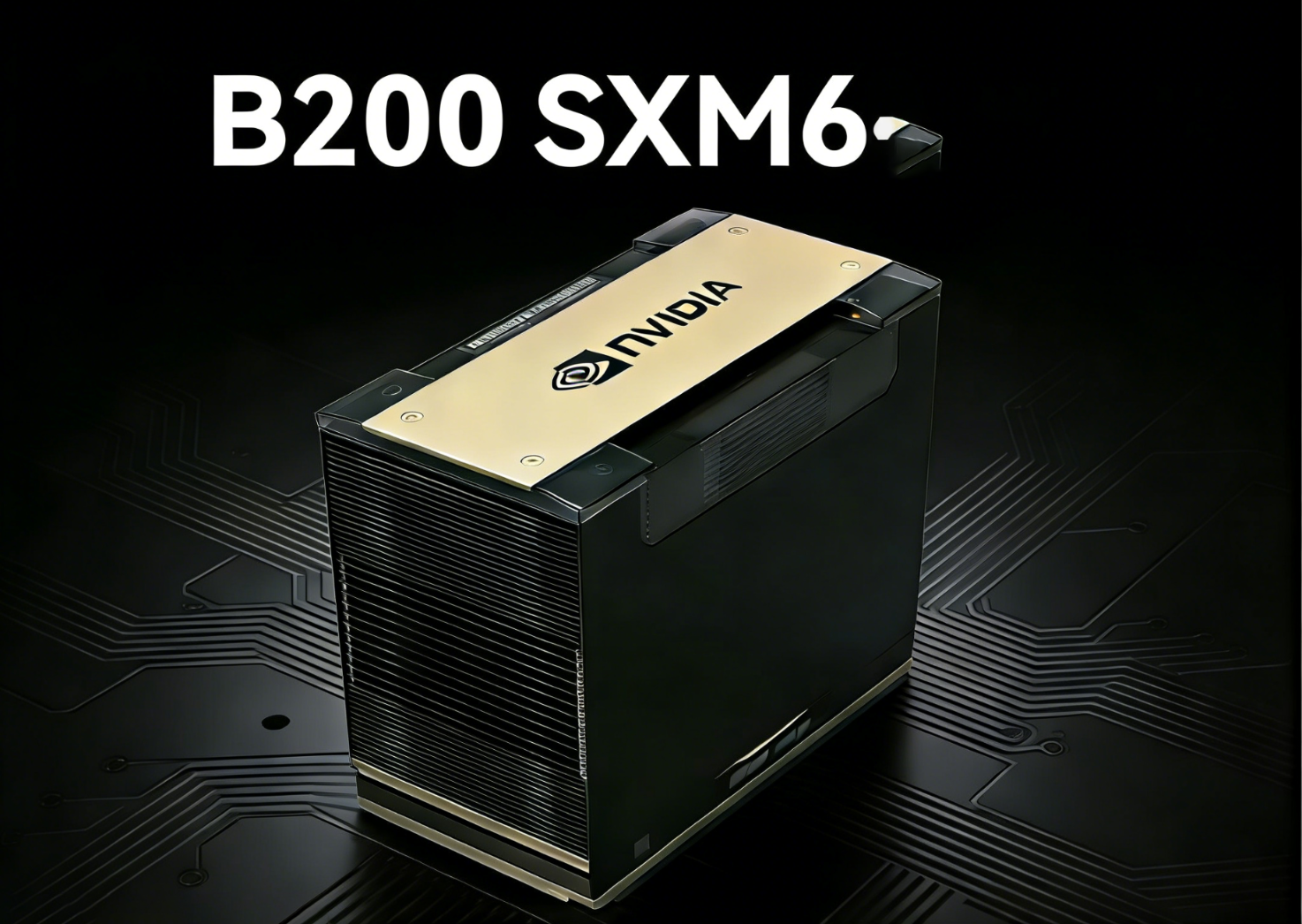
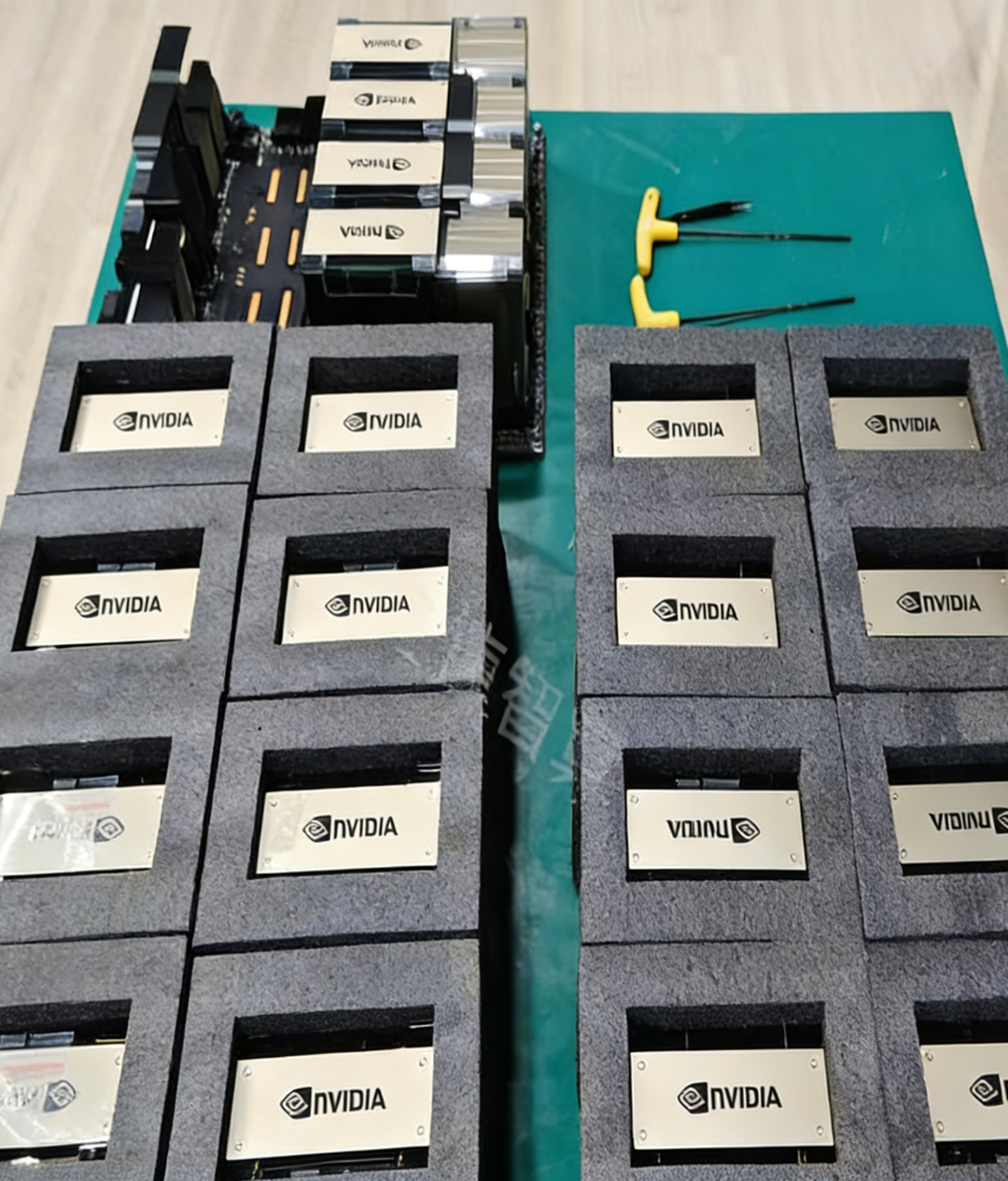
NVIDIA B200 Specs B200 SXM6 HMB3E 192GB Blackwell GPU for AI (2026) Video Card
B200 Key Specifications
| Specification |
B200 |
H200 (for reference) |
H100 (for reference) |
| Architecture |
Blackwell (GB200) |
Hopper |
Hopper |
| Transistors |
208 billion |
80 billion |
80 billion |
| Memory |
192GB HBM3e |
141GB HBM3e |
80GB HBM3 |
| Memory Bandwidth |
Up to 8 TB/s |
4.8 TB/s |
3.35 TB/s |
| FP4 Tensor Core |
Yes (native) |
No |
No |
| FP8 Tensor Core |
Yes (2nd gen) |
Yes |
Yes |
| Transformer Engine |
2nd generation |
1st generation |
1st generation |
| NVLink |
5th gen (1.8 TB/s) |
4th gen (900 GB/s) |
4th gen (900 GB/s) |
| TDP |
Up to 1000W |
Up to 700W |
Up to 700W |
| Manufacturing |
TSMC 4NP |
TSMC 4N |
TSMC 4N |
Architecture: What Blackwell Changes
Second-Generation Transformer Engine
The biggest improvement for AI workloads is the 2nd-gen Transformer Engine with native FP4 support:
-
FP4 precision — 4-bit floating point for inference. Halves memory usage vs FP8, enabling larger models or higher batch sizes on a single GPU
-
Dynamic precision management — automatically switches between FP4, FP8, and FP16 based on what each layer needs
-
Higher throughput — combined with architectural improvements, NVIDIA claims up to 4x inference performance vs H100
FP4 is particularly impactful for LLM inference. A model that needs 80GB in FP8 on H100 would need only ~40GB in FP4 on B200, leaving 150GB+ free for KV cache and batching.
192GB HBM3e Memory
The memory jump is massive:
| GPU |
Memory |
Memory Bandwidth |
| H100 |
80GB HBM3 |
3.35 TB/s |
| H200 |
141GB HBM3e |
4.8 TB/s |
| B200 |
192GB HBM3e |
Up to 8 TB/s |
192GB means:
-
Llama 70B in FP16 fits on a single GPU (140GB) with 52GB to spare for KV cache
-
Llama 70B in FP8 needs only ~70GB, leaving 122GB for massive batch sizes
-
Llama 405B in FP4 could potentially fit on 2 B200s
-
Multiple models served simultaneously from a single GPU
NVLink 5th Generation
NVLink bandwidth doubles from 900 GB/s (H100/H200) to 1.8 TB/s per GPU. For multi-GPU training, this means:
- Faster gradient synchronization during distributed training
- More efficient tensor parallelism for large model inference
- Better scaling efficiency when using 4-8 GPUs per node
GB200 and NVL72
NVIDIA is also shipping the B200 in pre-configured rack-scale systems:
-
GB200 — a compute module with 2 B200 GPUs + 1 Grace CPU, connected via NVLink
-
GB200 NVL72 — a full rack with 36 Grace CPUs and 72 B200 GPUs interconnected via NVLink, delivering 720 petaFLOPS of FP4 compute
These are designed for large-scale training and inference at the datacenter level.
B200 vs H100 vs H200
For LLM Inference
| Metric |
B200 |
H200 |
H100 |
| Llama 70B (FP8) tokens/sec |
~4x H100* |
~1.9x H100 |
1x (baseline) |
| Memory for Llama 70B FP8 |
70GB (122GB free) |
70GB (71GB free) |
70GB (10GB free) |
| Memory for Llama 70B FP4 |
~35GB (157GB free) |
N/A (no FP4) |
N/A (no FP4) |
| Max batch size (70B FP8) |
Very large |
Moderate |
Small |
*NVIDIA published claims. Real-world performance will vary by implementation and workload.
The B200's combination of more memory, higher bandwidth, and FP4 support could make single-GPU serving of 70B models practical at scale — something that's tight on H100 and comfortable but not optimal on H200.
For Training
NVIDIA claims up to 4x training performance on GPT-class models compared to H100, primarily from:
- Higher Tensor Core throughput
- FP8 training improvements (2nd-gen Transformer Engine)
- 2x NVLink bandwidth for better multi-GPU scaling
- More memory reducing the need for memory optimization techniques
For large model training, the B200 could reduce training time (and cost) by 3-4x compared to H100, assuming the software stack fully utilizes the new hardware features.